
Join Us As We Celebrate 30 Years Online!*
Mo' Funny: Black Comedy In America + Bonus: MP4 Video Download Or DVD
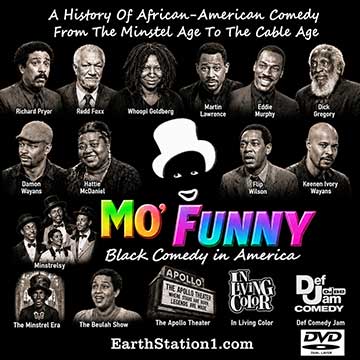
A Guided Tour Through The History Of African-American Comedy Up To The Dawn Of The Cable Age, With Its Stars: Richard Pryor, Redd Foxx, Whoopi Goldberg, Martin Lawrence, Eddie Murphy, Dick Gregory, Damon Wayans, Paul Mooney, Bert Williams And George Walker (Separately And Together As Walker And Williams), Flournoy Miller And Aubrey Lyles (Separately And Together As Miller And Lyles), Lincoln Perry (Stepin Fetchit), Hattie McDaniel, George Kirby, Butterfly McQueen, Louise Beavers, Della Reese, Eddie Anderson (Rochester), Mantan Moreland (Birmingham Brown), Pigmeat Markham, Moms Mabley, Dusty Fletcher, Tim Moore, Nipsey Russell, Timmie Rogers, Pearl Bailey, Godfrey Cambridge, Bill Cosby, Flip Wilson, Marsha Warfield, Rudy Ray Moore (Dolemite), T. K. Kirkland, Robin Harris, Tommy Davidson, David Adkin (Sinbad), Keenen Ivory Waywans, Phyllis Yvonne Stickney, Eddie Griffin, Bill Bellamy, Adele Givens And More -- And Its Showcases: The Minstrel Show, Shuffle Along (The First All-Black Hit Broadway Show), Amos 'N' Andy (White Copy Of Miller And Lyles), The Beulah Show, The Apollo Theater, In Living Color, Def Comedy Jam And More -- With Further Commentary By Donald Bogle, Norma Miller, Olivette Miller, Steve Allen, Lily Tomlin And More -- Produced By Ellen M. Krass, Richard Pryor And Jeffrey R. Costello, Written And Directed By Yvonne Smith (1993, Color, 1 Hour 28 Minutes) --
PLUS BONUS: NEW WORLD A-COMING: THE STORY OF NEGRO HUMOR, An Episode Of The Landmark 1944 Testament Of The Life And Issues Of Black Americans During World War II Based On Roi Ottley's 1943 Book "New World A-Coming: Inside Black America" (Audio Only, April 16, 1944, 25 Minutes) --
All Presented In Our Highest DVD Quality MPEG Video Format At 9.1 MBPS As An MP4 Video Download Or Archival Quality All Regions Format DVD! #MoFunny #BlackComedyInAmerica #AfricanAmericanComedy #BlackComedy #AfricanAmericanComedians #BlackComedians #YvonneSmith #RichardPryor #ReddFoxx #WhoopiGoldberg #MartinLawrence #EddieMurphy #DickGregory #DamonWayans #PaulMooney #BertWilliams #GeorgeWalker# WalkerAndWilliams #FlournoyMiller #AubreyLyles #MillerAndLyles #LincolnPerry #StepinFetchit #HattieMcDaniel #GeorgeKirby #ButterflyMcQueen #LouiseBeavers #DellaReese #EddieAnderson #Rochester #MantanMoreland #BirminghamBrown #PigmeatMarkham #MomsMabley #DustyFletcher #TimMoore #NipseyRussell #TimmieRogers #PearlBailey #GodfreyCambridge #BillCosby #FlipWilson #MarshaWarfield #RudyRayMoore #Dolemite #TKKirkland #RobinHarris #TommyDavidson #DavidAdkin #Sinbad #KeenenIvoryWaywans #PhyllisYvonneStickney #EddieGriffin #BillBellamy #AdeleGivens #MinstrelShows #ShuffleAlong #AmosNAndy #TheBeulahShow #TheApolloTheater #InLivingColor #DefComedyJam #DonaldBogle #NormaMiller #OlivetteMiller #SteveAllen #LilyTomlin #EllenMKrass #JeffreyRCostello #RepresentationOfAfricanAmericansInMedia #RepresentationOfAfricanAmericansOnTelevision #RepresentationOfAfricanAmericansOnTV #Blacks #AmericanBlacks #AfricanAmericans #TV #Television #TVShows #TelevisionShows #RoleModels #EthnicStereoptypes #Stereotypes #BlackStereotypes #AfricanStereotypes #AfricanAmericanStereotypes #DVD #MP4 #VideoDownload
*September 23, 2026: Updated With NEW WORLD A-COMING: THE STORY OF NEGRO HUMOR!
A Black Humor In America: -- Black humor has been an important part of American cultural life for centuries, serving not only as entertainment but also as a means of survival, social commentary, cultural expression, and resistance to racial oppression.
Origins: Slavery and the Oral Tradition
The origins of African American humor in the United States reach back to slavery, when enslaved Africans preserved elements of their cultural traditions through storytelling, music, satire, and folklore. Trickster characters such as Br'er Rabbit, who outwitted more powerful adversaries through cleverness, became symbols of survival in an oppressive society. Humor offered opportunities to ridicule authority, express frustration, and preserve dignity under circumstances in which open criticism could be dangerous.
The Nineteenth Century: Minstrelsy and Vaudeville
During the nineteenth century, blackface minstrelsy became one of America's most popular forms of entertainment. Predominantly white performers presented exaggerated racial caricatures that reinforced prevailing prejudices. African American entertainers subsequently entered the industry, sometimes performing within those same stereotypes while developing their own distinctive comic traditions. By the turn of the twentieth century, performers such as Bert Williams and George Walker had achieved considerable success. Williams, in particular, combined subtle satire, pathos, and impeccable comic timing, helping establish African American performers in mainstream American entertainment.
The 1920s–1950s: The Chitlin' Circuit
Segregation encouraged the development of a parallel Black entertainment industry. The Chitlin' Circuit, a network of theaters and nightclubs catering primarily to African American audiences, became an important training ground for generations of comedians. Jackie "Moms" Mabley, Redd Foxx, and other performers developed styles characterized by sharp observations, earthy humor, sexual innuendo, and social satire. The Apollo Theater in Harlem became a major showcase for their talents. Comedy recordings subsequently carried their performances to audiences far beyond the nightclub circuit.
The 1960s–1970s: Civil Rights and Mainstream Recognition
The Civil Rights Movement brought new prominence to politically outspoken comedians. Dick Gregory confronted racial discrimination through sophisticated satire, while Bill Cosby developed observational comedy that attracted a broad national audience. Television expanded opportunities for African American performers. The Flip Wilson Show, which premiered in 1970, became a major network success, while Redd Foxx brought his nightclub humor to television audiences through Sanford and Son. Richard Pryor subsequently transformed American stand-up comedy through intensely personal storytelling, frank language, racial commentary, and uncompromising explorations of American society.
The 1980s–1990s: The Comedy Boom
Eddie Murphy, Whoopi Goldberg, Chris Rock, and other performers helped expand Black comedy's popularity through stand-up, television, and motion pictures. During the 1990s, programs such as In Living Color, The Fresh Prince of Bel-Air, Martin, and Living Single brought diverse portrayals of African American life to national television. HBO's Def Comedy Jam introduced additional generations of stand-up performers to national audiences and became an influential showcase for Black comedy.
The Twenty-First Century
Black American humor continues to evolve through television, film, streaming services, podcasts, and social media. Performers and creators including Dave Chappelle, Wanda Sykes, Kevin Hart, Jordan Peele, Issa Rae, and Quinta Brunson have explored contemporary social issues while broadening the forms and audiences of African American comedy. From the trickster tales of enslaved Africans to today's internationally recognized comedians, Black humor has maintained a distinctive place in American culture. Its enduring importance lies in its ability to entertain, challenge conventions, expose social contradictions, and transform difficult experiences into shared laughter.
New Permanent Price Reductions!
Launching Our Summer "I Never Knew That Existed!" Days!
A New Commitment From EarthStation1.com!
Issued Sunday, June 28, 2026
For thirty years, EarthStation1.com has existed for one purpose: to preserve, curate, and share the history of our world through television, radio, film, and documentary media. During that time, the world has changed dramatically. The cost of nearly everything has risen, and for many people, simply making ends meet has become more difficult than ever. We believe that learning, discovery, and the enjoyment of history should never become luxuries reserved only for those who can afford them.
Beginning today, EarthStation1.com is introducing a new long-term pricing philosophy. Rather than asking, "What is the highest price people will pay?" we are asking a different question: "What is the fairest price that allows the greatest number of people to own, enjoy, and preserve these remarkable programs?" We want students, teachers, veterans, researchers, families, collectors, and lifelong learners everywhere to have access to the extraordinary stories that have shaped our world—without price becoming an unnecessary barrier.
This is more than a sale. It is a commitment to the future of EarthStation1.com and to the people we have proudly served since 1996. Our hope is simple: that by making our catalog more affordable than ever before, we can place more history into more homes, encourage greater understanding of our shared past, and ensure that these important films, broadcasts, and recordings continue to educate and inspire for generations to come. We invite you to explore our collection, rediscover old favorites, uncover new treasures, and join us as we begin this exciting new chapter together.
— Sam Fellowes
Executive Director of Customer Experience
EarthStation1.com

***** BAAAAHH-DAH-DAH-DAAAAAAHHHH!!! *****
HERALD: Hear ye! Hear ye! Let it be proclaimed throughout the Known and Unknown Universe!
By decree of the Curator of EarthStation1.com™, and with the enthusiastic concurrence of the Executive Director of Customer Experience...
Henceforth shall the proclamation read:
15% (Or More!) Daily Specials
...and there was much rejoicing among historians, documentary enthusiasts, collectors, lovers of old television and radio, seekers of the obscure, and all who delight in discovering the treasures of the past without having to mortgage the present.
The fanfare crescendos... banners unfurl... somewhere, Yul Brynner nods approvingly... and Cecil B. DeMille quietly murmurs, "Print it."
Copyright © 1996-2026 J. C. Kaelin, Jr., Proprietor, EarthStation1.com and MediaOutlet.com.
[Our motto and graphic by Sam Fellowes (2026).]